
Table of Contents
- Why Men’s Mental Health Matters
- Common Barriers Men Face
- 10 Actionable Mental Health Tips for Men
- 3.1 Start with Small Lifestyle Changes
- 3.2 Move Your Body—Any Way You Can
- 3.3 Fuel Your Brain with Balanced Meals
- 3.4 Sleep: The Overlooked Superpower
- 3.5 Build a Support Network
- 3.6 Talk it Out—Communication Tips
- 3.7 Stress Management on Busy Days
- 3.8 Learn Simple Coping Strategies
- 3.9 When to Consider Therapy
- 3.10 Keep Tracking Your Progress
- Overcoming the Stigma Around Men’s Mental Health
- Helpful Resources & Links
- Key Takeaways
- Join the Conversation

Why Men’s Mental Health Matters
Statistics from the World Health Organization show that depression affects more than 280 million people worldwide, and men are often less likely to seek help. Ignoring emotional health can lead to:
- Increased stress levels
- Relationship problems
- Physical illnesses such as heart disease
- Higher risk of substance use and suicide
Taking simple, steady steps can protect both your mental and physical well-being.
Common Barriers Men Face
Men often run into unique roadblocks when it comes to self-care:
| Barrier | How It Shows Up | Quick Fix |
|---|---|---|
| “Tough it out” mindset | Withholding emotions | Remind yourself that feelings are normal signals, not weaknesses |
| Lack of time | Long work hours | Use micro-breaks (2–5 minutes) for breathing or stretching |
| Fear of judgment | Worry about friends/family reactions | Share with one trusted person at first |
| Limited access to care | Cost or location challenges | Look for telehealth or sliding-scale clinics |
10 Actionable Mental Health Tips for Men
3.1 Start with Small Lifestyle Changes
Big overhauls can feel overwhelming. Pick one habit below and try it for a week:
- Drink an extra glass of water each morning
- Step outside for ten minutes during lunch
- Swap one sugary drink for herbal tea
Consistency beats intensity.
3.2 Move Your Body—Any Way You Can
Regular movement helps reduce anxiety and boost mood by releasing endorphins.
Easy ideas:
- 10-minute walk after dinner
- Body-weight exercises (push-ups, squats) during TV ads
- Weekend bike ride with a friend
If you like structure, free apps like Nike Training Club offer guided workouts.
3.3 Fuel Your Brain with Balanced Meals
Food affects brain chemistry. Aim for:
- Protein at each meal (eggs, beans, lean meat)
- Omega-3 fats (salmon, walnuts, flaxseed)
- Colorful fruits and veggies
Pro tip: Batch-cook on Sunday and store pre-portioned bowls so healthy choices are ready when you are tired.
3.4 Sleep: The Overlooked Superpower
Poor sleep blocks emotional regulation and makes stress feel worse.
Quick wins:
- Set a consistent bedtime.
- Dim screens 30 minutes before sleep.
- Keep the bedroom cool and dark.
If racing thoughts keep you up, jot them down on paper; this simple act can lower nighttime rumination.
3.5 Build a Support Network
Connection is core to men’s mental health. A support network can include:
- Family members
- Close friends
- Sports teammates
- Online peer groups like Men’s Health Forum
Schedule a short check-in message or call each week. It keeps relationships alive even when life feels busy.
3.6 Talk it Out—Communication Tips
Opening up may feel awkward. Use these steps:
- Choose privacy: a walk, car ride, or quiet café.
- State your feelings simply: “I’ve been feeling stressed lately.”
- Ask for what you need: “Could you just listen for a minute?”
Avoid solving everything at once. A single honest chat can lighten the load.
3.7 Stress Management on Busy Days
When time is tight, try:
- 4-7-8 breathing (inhale 4 sec, hold 7 sec, exhale 8 sec)
- Quick desk stretches
- Listening to calming music while commuting
These micro-breaks reset your nervous system.
3.8 Learn Simple Coping Strategies
Develop a toolbox so you’re prepared when tough moments strike.
Items to include:
- A grounding exercise (e.g., name 5 things you can see)
- A soothing playlist
- Journaling prompts
- A short list of people to call
Write them down and keep the list on your phone.
3.9 When to Consider Therapy
Therapy is not a last resort; it is routine care like going to the gym. Signs you might benefit:
- Feeling stuck in negative thoughts for two weeks or more
- Loss of interest in hobbies
- Substance use has increased
- Friends or family voice concern
You can start with online options such as BetterHelp or look for local therapists at Psychology Today’s Find a Therapist.
3.10 Keep Tracking Your Progress
Progress often hides in tiny gains.
Try:
- Mood tracking apps (e.g., Daylio)
- A notebook where you rate each day 1–10
- Monthly review: celebrate what improved, note what needs work
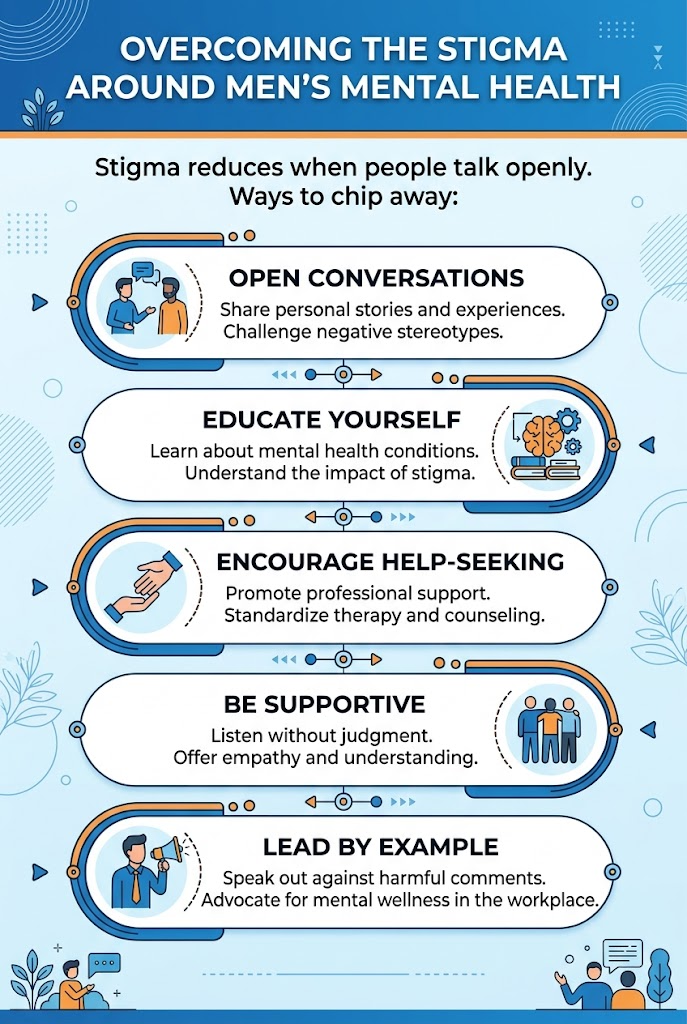
Overcoming the Stigma Around Men’s Mental Health
Stigma reduces when people talk openly. Ways to chip away:
- Share articles or podcasts on men’s mental well-being with friends.
- Support campaigns like Movember that raise awareness for men’s health issues.
- Correct myths when you hear them: needing help is not weakness.
- If you are a leader at work, model balanced behavior—leave on time, speak about stress management openly.
Helpful Resources & Links
- Crisis Support (U.S.): Dial 988 or visit 988lifeline.org
- Crisis Support (U.K.): Samaritans 116 123 or samaritans.org
- Mental Health Information: National Alliance on Mental Illness
- Self-Care Tools: Headspace (meditation), Calm (sleep stories)
- Community Forums: Reddit r/men, Men’s Sheds Association for local meet-ups
Key Takeaways
- Small, steady steps support long-term mental well-being.
- Movement, balanced food, and sleep form the base of self-care.
- Communication and support networks help reduce stress and loneliness.
- Therapy is routine care, not a last resort.
- Speaking up breaks stigma and helps other men feel less alone.
Join the Conversation
Have a tip that helped your mental health? Share it below so other readers can benefit, or pass this article along to a friend who might need a boost today. Your voice could make a real difference.
Stay connected. Stay supported. Keep looking after your mental health, every single day.