
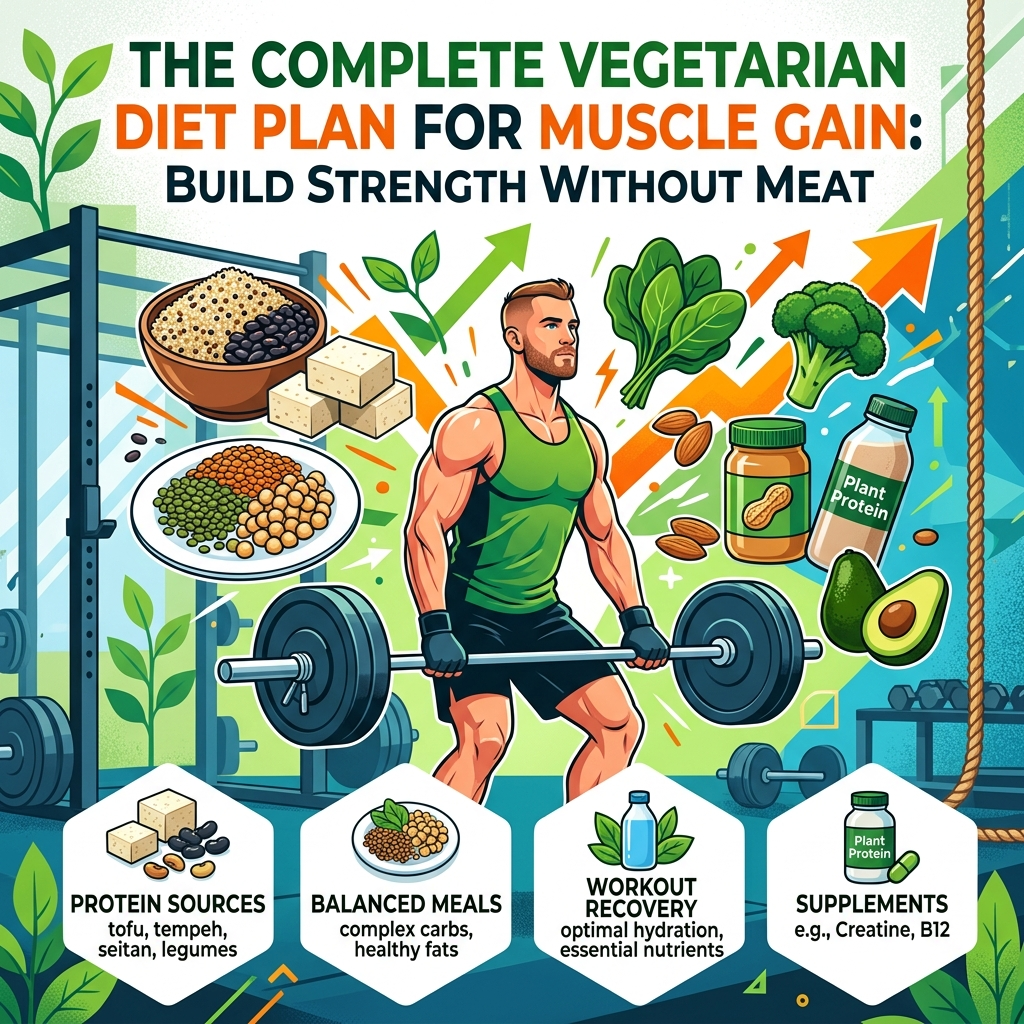
The Complete Vegetarian Diet Plan for Muscle Gain: Build Strength Without Meat

Vegetarian diet plan for muscle gain
Create a clean, modern infographic illustration in a 3:2 aspect ratio, full-bleed layout, no frame, no inset margins, wide horizontal composition with multiple sections across the page. Use a professional fitness-and-nutrition style with a white background, deep green, navy, bright lime accents, and warm orange highlights. Use bold sans-serif typography for headings and smaller clean sans-serif body text.

Top header across the full width:
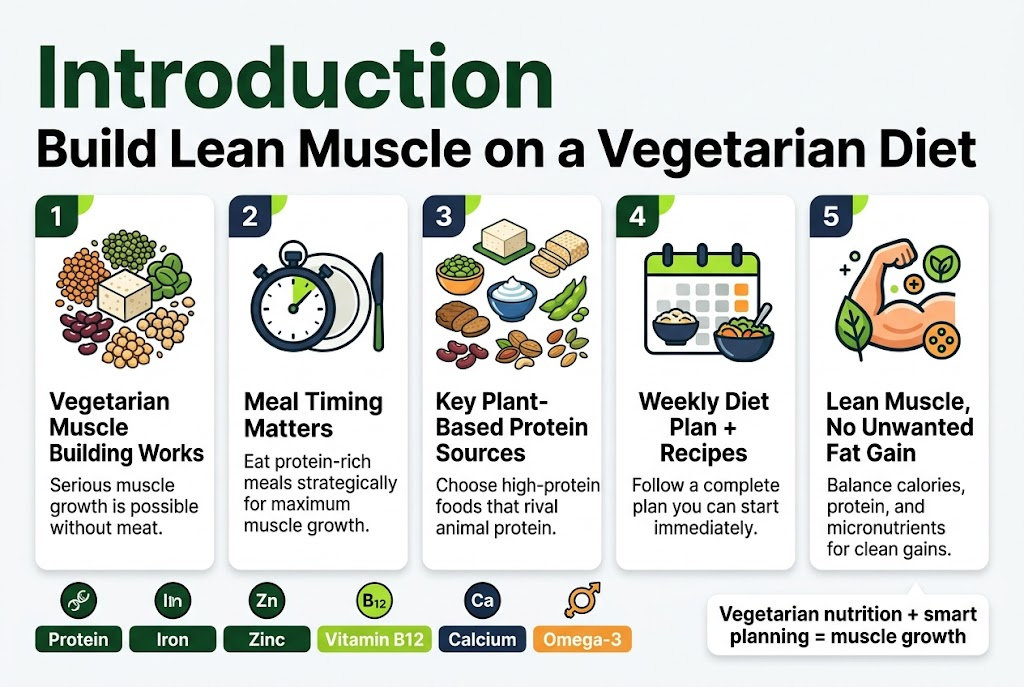
Large bold title text: "Introduction"
Subtitle text below: "Build Lean Muscle on a Vegetarian Diet"

Main layout: five horizontal content blocks or cards arranged in a balanced wide grid with icons and numbered labels.

Section 1 on the left:
Number badge "1"
A strong plant protein icon: lentils, tofu, beans, chickpeas, and quinoa arranged in a neat cluster.
Heading text: "Vegetarian Muscle Building Works"
Body text: "Serious muscle growth is possible without meat."

Section 2 next to it:
Number badge "2"
A stopwatch and plate icon.
Heading text: "Meal Timing Matters"
Body text: "Eat protein-rich meals strategically for maximum muscle growth."

Section 3 in the center:
Number badge "3"
A protein sources icon collage: tofu block, tempeh slices, Greek-style yogurt bowl, edamame, seitan, beans, nuts, and seeds.
Heading text: "Key Plant-Based Protein Sources"
Body text: "Choose high-protein foods that rival animal protein."

Section 4 next to it:
Number badge "4"
A weekly calendar icon with meal bowls.
Heading text: "Weekly Diet Plan + Recipes"
Body text: "Follow a complete plan you can start immediately."

Section 5 on the right:
Number badge "5"
A muscle arm icon with a leaf and nutrient symbols.
Heading text: "Lean Muscle, No Unwanted Fat Gain"
Body text: "Balance calories, protein, and micronutrients for clean gains."

Bottom strip across the width:
A row of small nutrient icons with labels in short text blocks:
"Protein"
"Iron"
"Zinc"
"Vitamin B12"
"Calcium"
"Omega-3"

Add a small bottom-right callout box with bold text:
"Vegetarian nutrition + smart planning = muscle growth"

Use clear section dividers, subtle shadows, rounded rectangles, strong visual hierarchy, and simple infographic-style icons. Keep text crisp and readable.


Building muscle on a vegetarian diet isn’t just possible—it’s highly effective when done right. This comprehensive guide targets vegetarians, fitness enthusiasts, and anyone looking to gain lean muscle mass through plant-based nutrition and strategic meal planning.

Many people think you need meat to build serious muscle, but that’s simply not true. With the right protein sources and proper nutrition timing, vegetarian foods can fuel impressive muscle growth while supporting your fitness goals.

We’ll walk you through essential plant-based protein sources that rival any animal protein, show you how to time your meals for maximum muscle growth, and provide a complete weekly vegetarian diet plan with recipes you can start using immediately. You’ll also discover how to create a healthy eating approach that builds muscle without unwanted fat gain, plus the key micronutrients that make or break vegetarian muscle building success.

Essential Protein Sources for Plant-Based Muscle Building
Create a clean, modern full-bleed infographic in a 3:2 aspect ratio about plant-based muscle-building protein sources. Use a white background with deep green, navy, gold, and orange accent colors, crisp sans-serif typography, bold section headers, and a professional editorial layout with wide horizontal sections and multi-column blocks.

Top banner across the full width:
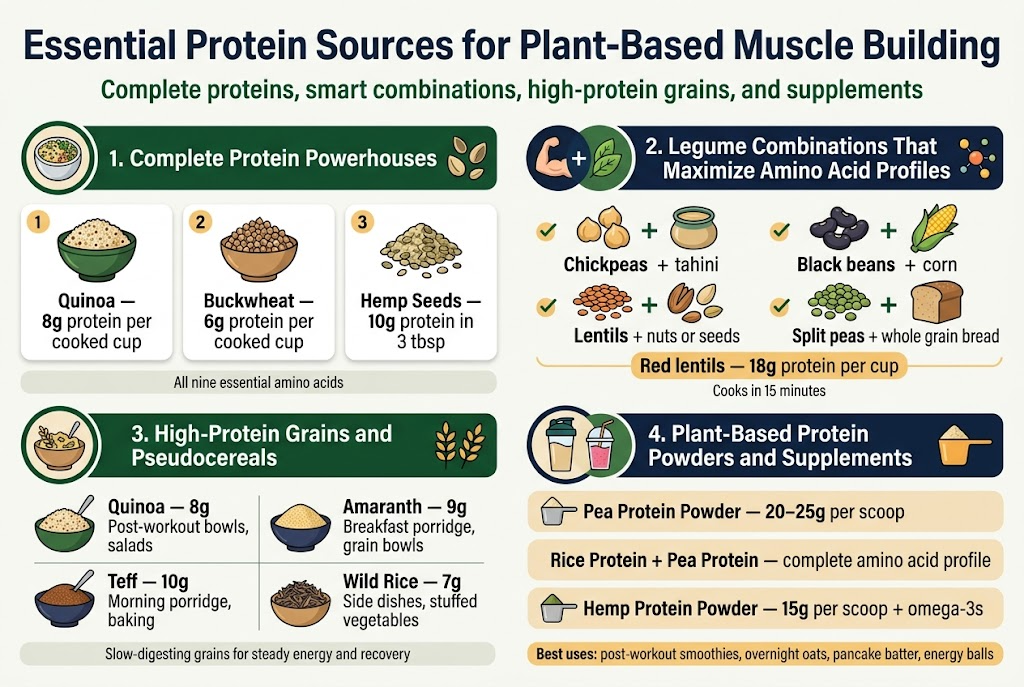
Large bold title in dark navy: "Essential Protein Sources for Plant-Based Muscle Building"
Subtitle beneath in smaller green text: "Complete proteins, smart combinations, high-protein grains, and supplements"

Main body arranged in four wide sections with clear icons and numbered labels:

1. Left-top section with a circular bowl icon and seed icons:
Header: "1. Complete Protein Powerhouses"
Three side-by-side mini cards with illustrations of quinoa, buckwheat, and hemp seeds.
Card 1 text: "Quinoa — 8g protein per cooked cup"
Card 2 text: "Buckwheat — 6g protein per cooked cup"
Card 3 text: "Hemp Seeds — 10g protein in 3 tbsp"
Small line under the cards: "All nine essential amino acids"

2. Right-top section with a pairing icon showing two foods connected by a plus sign:
Header: "2. Legume Combinations That Maximize Amino Acid Profiles"
Display four illustrated food pairings in two columns with checkmarks:
"Chickpeas + tahini"
"Black beans + corn"
"Lentils + nuts or seeds"
"Split peas + whole grain bread"
Add a highlighted callout box:
"Red lentils — 18g protein per cup"
Smaller text below: "Cooks in 15 minutes"

3. Bottom-left wide section with grain bowl illustrations:
Header: "3. High-Protein Grains and Pseudocereals"
Create a neat 2x2 comparison table with icons and values:
"Quinoa — 8g — Post-workout bowls, salads"
"Amaranth — 9g — Breakfast porridge, grain bowls"
"Teff — 10g — Morning porridge, baking"
"Wild Rice — 7g — Side dishes, stuffed vegetables"
Add a subtle note strip below: "Slow-digesting grains for steady energy and recovery"

4. Bottom-right wide section with shaker bottle, smoothie, and powder scoop icons:
Header: "4. Plant-Based Protein Powders and Supplements"
Three stacked callout blocks:
"Pea Protein Powder — 20–25g per scoop"
"Rice Protein + Pea Protein — complete amino acid profile"
"Hemp Protein Powder — 15g per scoop + omega-3s"
Small footer line in a highlighted bar:
"Best uses: post-workout smoothies, overnight oats, pancake batter, energy balls"

Add small decorative icons throughout: muscle arm, leaf, spoon, grain stalk, smoothie cup, checkmarks, and amino acid dots. Use clear visual hierarchy, strong alignment, ample spacing, and no clutter. Keep all text sharp and readable, with section labels, nutrient numbers, and food pairings emphasized in bold. No border frame; full-bleed infographic layout.

Complete Protein Powerhouses: Quinoa, Buckwheat, and Hemp Seeds

These three nutritional champions stand out among plant-based protein sources because they contain all nine essential amino acids your body needs for muscle building. Quinoa delivers about 8 grams of protein per cooked cup and cooks just like rice, making it perfect for post-workout meals. Buckwheat groats provide 6 grams of protein per cooked cup and work beautifully in breakfast bowls or as a rice substitute.

Hemp seeds pack an incredible punch with 10 grams of protein in just 3 tablespoons. Sprinkle them on smoothies, salads, or yogurt for an instant protein boost. What makes these foods special is their amino acid completeness – you don’t need to worry about combining them with other foods to get all the building blocks your muscles crave.

Legume Combinations That Maximize Amino Acid Profiles

Smart pairing transforms good protein into great protein for muscle gain. The classic combination of beans and rice creates a complete amino acid profile that rivals any animal protein. Try black beans with brown rice, or lentils with quinoa for maximum muscle-building potential.

Here are winning combinations that deliver complete proteins:

  • Chickpeas + tahini (hummus is basically muscle food)
  • Black beans + corn (think Mexican-inspired bowls)
  • Lentils + nuts or seeds (perfect for hearty salads)
  • Split peas + whole grain bread (comfort food that builds muscle)

Red lentils cook in just 15 minutes and provide 18 grams of protein per cup. When paired with nuts or seeds, they become a muscle-building powerhouse that fits perfectly into your weekly vegetarian diet plan.

High-Protein Grains and Pseudocereals for Sustained Energy

Beyond quinoa and buckwheat, several other grains deserve spots in your muscle-building nutrition arsenal. Amaranth contains 9 grams of protein per cooked cup and has a nutty flavor that works in both sweet and savory dishes. Teff, a tiny Ethiopian grain, provides 10 grams of protein per cooked cup and makes excellent porridge.

Ancient grains like spelt and kamut offer 10-11 grams of protein per cooked cup. These grains digest slowly, providing steady energy for your weight training sessions while supporting muscle recovery. Wild rice steps up with 7 grams of protein per cup and adds texture variety to your meal planning routine.

Grain/Pseudocereal Protein (per cooked cup) Best Uses
Quinoa 8g Post-workout bowls, salads
Amaranth 9g Breakfast porridge, grain bowls
Teff 10g Morning porridge, baking
Wild Rice 7g Side dishes, stuffed vegetables

Plant-Based Protein Powders and Supplements

Sometimes whole foods alone can’t meet your protein targets, especially on intense training days. Pea protein powder delivers 20-25 grams of protein per scoop and mixes well in smoothies without the chalky texture of some alternatives. Rice protein offers easy digestion and combines perfectly with pea protein for a complete amino acid profile.

Hemp protein powder provides 15 grams of protein per scoop along with healthy omega-3 fatty acids that support recovery. For maximum muscle gain benefits, look for blended protein powders that combine multiple plant sources – these typically provide the most complete amino acid profiles.

Timing matters with protein supplements. Blend them into post-workout smoothies with banana and almond milk, or mix into overnight oats for a protein-packed breakfast. Adding protein powder to pancake batter or energy balls creates convenient muscle-building snacks that support your fitness goals throughout the day.

Strategic Meal Timing for Maximum Muscle Growth
Create a clean, modern landscape infographic in a 3:2 aspect ratio with a full-bleed background, no frame, no inset margins, and a wide horizontal layout. Use a professional fitness-and-nutrition style with a white background, deep green and teal accents, warm yellow highlights, and dark charcoal text. Use bold sans-serif typography for headings and smaller readable sans-serif body text. 

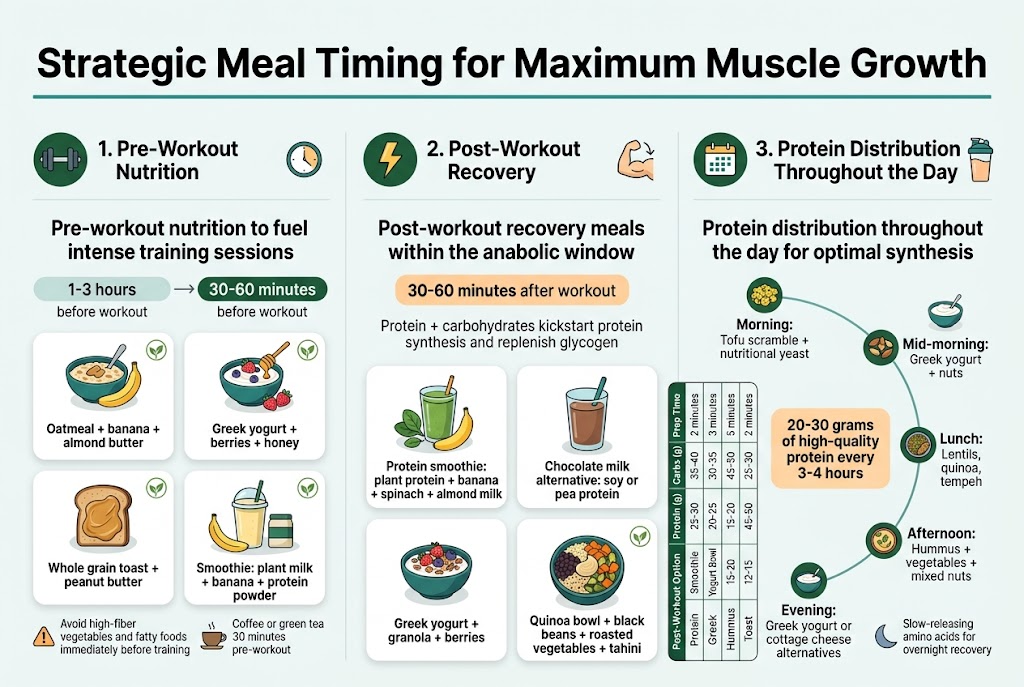
Top across the full width: a large bold title in dark charcoal text, centered-left at the top: "Strategic Meal Timing for Maximum Muscle Growth". Add a thin teal divider line beneath it.

Below the title, divide the infographic into three wide horizontal sections with clear visual hierarchy and icons.

LEFT SECTION: "1. Pre-Workout Nutrition" with a dumbbell icon and a small clock icon.
Place a bold subheading: "Pre-workout nutrition to fuel intense training sessions"
Under it, show a left-to-right mini timeline with 1-3 hours before workout and 30-60 minutes before workout.
Include four rounded food cards with illustrated vegetarian meal icons:
- "Oatmeal + banana + almond butter"
- "Greek yogurt + berries + honey"
- "Whole grain toast + peanut butter"
- "Smoothie: plant milk + banana + protein powder"
Add small warning icons beside a short line of text: "Avoid high-fiber vegetables and fatty foods immediately before training"
Add a small coffee cup icon with text: "Coffee or green tea 30 minutes pre-workout"

CENTER SECTION: "2. Post-Workout Recovery" with a lightning bolt icon and a muscle recovery icon.
Place a bold subheading: "Post-workout recovery meals within the anabolic window"
Show a highlighted orange-tinted callout box with the text: "30-60 minutes after workout"
Add a short supportive line: "Protein + carbohydrates kickstart protein synthesis and replenish glycogen"
Include four food option cards in a 2x2 grid with simple illustrated bowls and smoothies:
- "Protein smoothie: plant protein + banana + spinach + almond milk"
- "Chocolate milk alternative: soy or pea protein"
- "Greek yogurt + granola + berries"
- "Quinoa bowl + black beans + roasted vegetables + tahini"
Add a small vertical mini-table on the right side of this center section with a neat grid and bold header row:
Headers exactly: "Post-Workout Option | Protein (g) | Carbs (g) | Prep Time"
Rows exactly:
"Protein Smoothie | 25-30 | 35-40 | 2 minutes"
"Greek Yogurt Bowl | 20-25 | 30-35 | 3 minutes"
"Quinoa Bowl | 15-20 | 45-50 | 5 minutes"
"Hummus Toast | 12-15 | 25-30 | 2 minutes"

RIGHT SECTION: "3. Protein Distribution Throughout the Day" with a calendar icon and a protein shake icon.
Place a bold subheading: "Protein distribution throughout the day for optimal synthesis"
Show a vertical or curved daily flow with five meal-time nodes connected by a thin line, each node with a small food icon:
- Morning: "Tofu scramble + nutritional yeast"
- Mid-morning: "Greek yogurt + nuts"
- Lunch: "Lentils, quinoa, tempeh"
- Afternoon: "Hummus + vegetables + mixed nuts"
- Evening: "Greek yogurt or cottage cheese alternatives"
Add a central callout box with bold text: "20-30 grams of high-quality protein every 3-4 hours"
Add a small moon icon near the evening item with text: "Slow-releasing amino acids for overnight recovery"

Use clean section labels, clear spacing, and strong visual separation. Add small plant-based leaf icons next to vegetarian food items. Use flat vector illustration style with subtle shadows, crisp lines, and balanced alignment. Ensure all text is legible and exactly as written. No people, no photography, no clutter.

Pre-workout nutrition to fuel intense training sessions

Timing your pre-workout meal can make or break your training session. Eating the right vegetarian foods 1-3 hours before hitting the weights gives your muscles the energy they need to push through challenging sets. Complex carbohydrates should form the foundation of your pre-workout nutrition, providing steady glucose release to fuel your workout.

Oatmeal with sliced banana and a tablespoon of almond butter delivers the perfect combination of quick and sustained energy. The banana provides fast-acting sugars while oats release energy gradually. Greek yogurt with berries and a drizzle of honey offers another excellent option, combining protein with easily digestible carbs.

For those training early morning, a piece of whole grain toast with peanut butter consumed 30-60 minutes before working out prevents muscle breakdown without causing digestive discomfort. If you prefer liquid nutrition, a smoothie made with plant milk, banana, and protein powder digests quickly while providing essential amino acids.

Avoid high-fiber vegetables and fatty foods immediately before training, as these can cause gastrointestinal distress during intense exercise. Coffee or green tea consumed 30 minutes pre-workout can enhance focus and performance through natural caffeine content.

Post-workout recovery meals within the anabolic window

The 30-60 minutes following your workout represent a crucial window for muscle recovery and growth. Your muscles are primed to absorb nutrients, making this the ideal time to consume a combination of protein and carbohydrates. This post-workout period kickstarts protein synthesis and replenishes depleted glycogen stores.

A protein smoothie made with plant-based protein powder, banana, spinach, and almond milk provides approximately 25-30 grams of protein along with recovery-supporting carbohydrates. The liquid format ensures rapid absorption when your muscles need nutrients most.

Chocolate milk alternatives made with soy or pea protein offer another convenient option, providing the optimal 3:1 or 4:1 carb-to-protein ratio that research supports for recovery. Greek yogurt topped with granola and mixed berries delivers complete proteins alongside muscle-replenishing sugars.

For solid food options, a quinoa bowl with black beans, roasted vegetables, and tahini dressing provides complete amino acid profiles while supporting glycogen restoration. Whole grain toast topped with hummus and sliced tomatoes offers plant-based proteins with easily digestible carbohydrates.

Post-Workout Option Protein (g) Carbs (g) Prep Time
Protein Smoothie 25-30 35-40 2 minutes
Greek Yogurt Bowl 20-25 30-35 3 minutes
Quinoa Bowl 15-20 45-50 5 minutes
Hummus Toast 12-15 25-30 2 minutes

Protein distribution throughout the day for optimal synthesis

Spreading protein intake evenly across multiple meals maximizes muscle protein synthesis better than consuming large amounts in just one or two sittings. Research shows that consuming 20-30 grams of high-quality protein every 3-4 hours maintains elevated amino acid levels in your bloodstream, supporting continuous muscle building throughout the day.

Start your morning with protein-rich foods like tofu scramble with nutritional yeast, providing approximately 25 grams of complete protein. Mid-morning snacks should include protein sources such as Greek yogurt with nuts or a small smoothie with plant protein powder.

Lunch should center around legumes, quinoa, or tempeh to deliver another substantial protein dose. A lentil and vegetable curry with brown rice or a chickpea salad with hemp seeds ensures you meet your midday protein targets.

Afternoon protein intake becomes crucial for those training later in the day. Hummus with vegetables, mixed nuts, or a protein bar made from plant sources maintains amino acid availability. Dinner should feature substantial protein portions through combinations like beans with quinoa, tofu stir-fry, or seitan-based dishes.

Evening protein consumption, particularly casein-like proteins from sources such as Greek yogurt or cottage cheese alternatives, provides slow-releasing amino acids that support overnight muscle recovery. This steady protein distribution throughout your weekly vegetarian diet plan ensures optimal muscle gain while supporting your fitness goals through strategic meal planning.

Caloric Surplus Planning Without Excess Fat Gain
Create a clean, professional full-bleed infographic in landscape 3:2 ratio with a modern vegetarian fitness theme, using a white background, deep green and teal accents, warm orange highlights, dark charcoal text, and flat vector icons. Use a wide multi-section layout, not a narrow poster. Add a bold top headline across the full width.

Top header:
Large bold title text: "Caloric Surplus Planning Without Excess Fat Gain"
Smaller subtitle directly underneath: "Calculating your daily caloric needs for lean muscle growth"

Main body layout: four wide horizontal sections arranged in a 2x2 grid with clear spacing and colored section headers.

Section 1, top left:
Header text: "1. Estimate Daily Calorie Needs"
Place a scale icon and a muscle/leaf icon.
Include these short lines:
"Maintenance + 200–500 calories"
"Body weight × 16–18 = moderately active"
"Body weight × 18–20 = intense training"
"150 lb example: 2,400–2,700 calories/day"
"Track weight and body composition weekly"

Section 2, top right:
Header text: "2. Choose Nutrient-Dense Vegetarian Foods"
Place small illustrated icons for legumes, nuts, grains, and tofu.
Use a neat four-row mini table with these exact labels and values:
"Legumes — Lentils, chickpeas, black beans — 300–350"
"Nuts/Seeds — Almonds, hemp seeds, tahini — 550–600"
"Whole Grains — Quinoa, oats, brown rice — 350–380"
"Protein-Rich — Tofu, tempeh, seitan — 150–300"
Add a small note at the bottom:
"Avoid processed snacks and sugary drinks"

Section 3, bottom left:
Header text: "3. Balance Your Macros"
Place simple macro pie-chart style icons or three colored bars with labels.
Show these exact lines:
"Protein: 1.6–2.2g/kg body weight"
"25–30% of calories"
"Carbohydrates: 4–6g/kg body weight"
"40–50% of calories"
"Fats: 0.8–1.2g/kg body weight"
"20–30% of calories"
Add a small phone/app icon with the text:
"Cronometer or MyFitnessPal"

Section 4, bottom right:
Header text: "4. Adjust Portions by Training Intensity"
Place a dumbbell icon, calendar icon, and a progress arrow.
Include these exact lines:
"Heavy lifting days: increase carbs around workouts"
"Rest days: slightly lower calories, keep protein high"
"Intense training phases: scale portions up"
"Deload weeks: dial portions back"
"Gain 0.5–1 lb per week = too many calories"
"No gain after 2–3 weeks = eat more"

Add a bottom horizontal callout band across the full width with a green accent and a checkmark icon. Include this text:
"Lean muscle growth = enough calories, balanced macros, and weekly adjustments"

Typography:
Use bold sans-serif for headings, medium sans-serif for body text, highly legible, infographic-style hierarchy. Keep text crisp and evenly aligned. Use icons beside each section title and small visual markers for each bullet. Maintain a polished, nutrition-and-fitness infographic look with clear spacing, strong contrast, and organized blocks.

Calculating your daily caloric needs for lean muscle growth

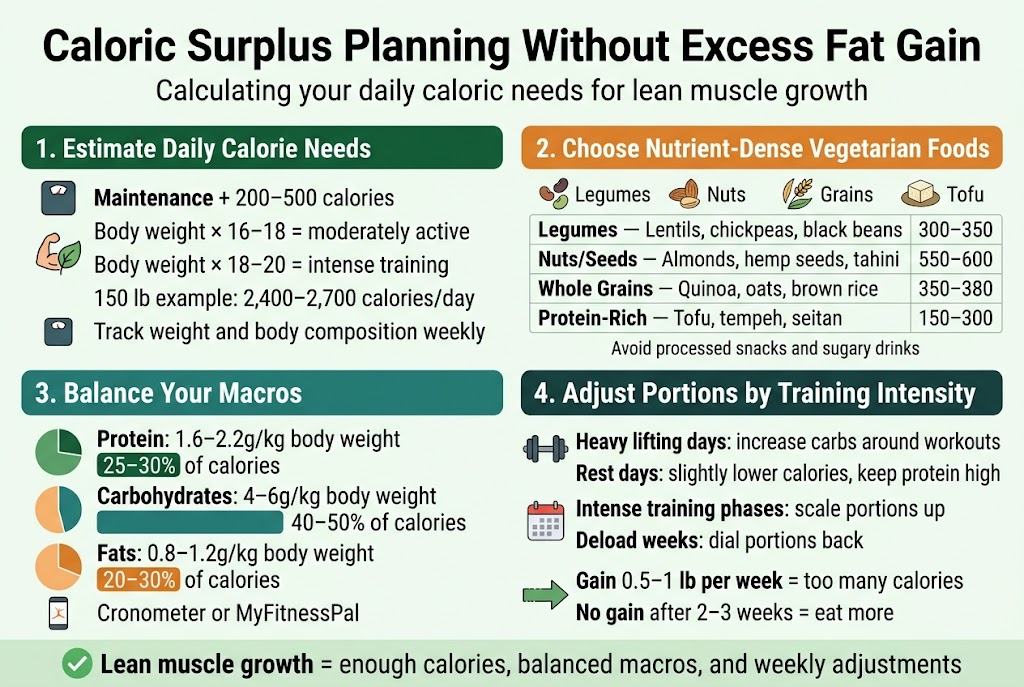
Building muscle on a vegetarian diet starts with eating enough calories to support growth while avoiding excessive fat gain. Your baseline metabolic rate depends on factors like age, weight, height, and activity level. Most people need to add 200-500 calories above maintenance to promote muscle gain effectively.

Use this simple formula: multiply your body weight by 16-18 for moderately active individuals, or 18-20 for those following intense weight training programs. A 150-pound person would need roughly 2,400-2,700 calories daily for lean muscle growth. Track your weight and body composition weekly to fine-tune these numbers based on your progress.

Nutrient-dense foods that support clean bulking

Plant-based muscle gain thrives on whole, minimally processed foods that pack maximum nutrition per calorie. Focus on these powerhouse options:

Food Category Best Choices Calories per 100g
Legumes Lentils, chickpeas, black beans 300-350
Nuts/Seeds Almonds, hemp seeds, tahini 550-600
Whole Grains Quinoa, oats, brown rice 350-380
Protein-Rich Tofu, tempeh, seitan 150-300

These vegetarian foods provide sustained energy while supporting muscle protein synthesis. Avoid empty calories from processed snacks and sugary drinks that can derail your lean gaining goals.

Tracking macronutrients to maintain optimal ratios

Successful muscle gain requires balanced macro distribution. Aim for:

  • Protein: 1.6-2.2g per kg body weight (25-30% of calories)
  • Carbohydrates: 4-6g per kg body weight (40-50% of calories)
  • Fats: 0.8-1.2g per kg body weight (20-30% of calories)

Use apps like Cronometer or MyFitnessPal to track your intake accurately. Many vegetarian protein sources come bundled with carbs or fats, so planning becomes crucial for hitting these targets consistently.

Adjusting portions based on training intensity and goals

Your weekly vegetarian diet plan should flex with your training schedule. On heavy lifting days, increase carb portions around workouts to fuel performance and recovery. Rest days call for slightly lower calories while maintaining protein intake.

Scale portions up during intense training phases and dial them back during deload weeks. Monitor your body’s response – gaining more than 0.5-1 pound weekly likely means too many calories, while no weight gain after 2-3 weeks suggests you need more fuel for optimal muscle building.

Sample 7-Day Meal Plan with Recipes
Create a full-bleed 3:2 landscape infographic with a clean modern nutrition design, white background, teal, green, orange, and deep navy accents, bold sans-serif headings, smaller readable body text, and clear section dividers. Place a large bold title at the top center: "Sample 7-Day Meal Plan with Recipes". Below the title, organize the content into three wide horizontal sections with illustrated food icons and numbered recipe blocks. Use simple flat vector icons, ingredient bowls, and small protein badge circles beside each recipe. Keep the layout open, balanced, and easy to scan.

Top section, header on left in dark navy: "High-protein breakfast options for sustained morning energy"
Show 4 side-by-side recipe cards with icons:
1. Greek yogurt parfait icon with berries, granola, hemp seeds. Text: "Greek yogurt parfait" and "25-30g protein"
   Small ingredient line: "1 cup Greek yogurt, ¼ cup granola, ½ cup berries, 2 tbsp hemp seeds"
2. Overnight oats jar icon with oats and almond butter. Text: "Overnight oats with protein powder" and "35-40g protein"
   Small ingredient line: "½ cup rolled oats, 1 scoop plant-based protein powder, 1 tbsp almond butter, chia seeds, plant milk"
3. Tofu scramble skillet icon with tofu, spinach, black beans. Text: "Tofu scramble" and "28g protein"
   Small ingredient line: "Firm tofu, nutritional yeast, turmeric, spinach, black beans"
4. Smoothie bowl icon with banana, spinach, nuts, seeds. Text: "Protein smoothie bowl" and "30g protein"
   Small ingredient line: "Protein powder, frozen bananas, spinach, plant milk, nuts, seeds, fresh fruit"

Middle section, header on left in green: "Power-packed lunch combinations for midday fuel"
Show 4 side-by-side recipe cards with icons:
1. Quinoa bowl icon with black beans, roasted vegetables, tahini drizzle. Text: "Quinoa bowl" and "22g protein"
   Small ingredient line: "Black beans, roasted vegetables, tahini dressing"
2. Lentil curry bowl icon with rice and spices. Text: "Lentil curry with brown rice" and "25g protein"
   Small ingredient line: "Red lentils, coconut milk, vegetables, warming spices"
3. Buddha bowl icon with chickpeas, sweet potato, avocado, hemp seeds, leafy greens. Text: "Buddha bowl" and no protein number
   Small ingredient line: "Chickpeas, roasted sweet potato, avocado, hemp seeds, leafy greens"
4. Tempeh sandwich icon on whole grain bread. Text: "Tempeh sandwich" and "20g protein"
   Small ingredient line: "Marinated tempeh, whole grain bread, avocado, vegetables"

Bottom section, header on left in orange-red: "Post-workout dinner recipes for maximum recovery"
Show 4 side-by-side recipe cards with icons:
1. Pasta bowl icon with lentil bolognese sauce. Text: "Pasta with lentil bolognese" and "24g protein"
   Small ingredient line: "Red lentils, mushrooms, nutritional yeast"
2. Burrito bowl icon with black beans, sweet potato, quinoa, pumpkin seeds. Text: "Black bean and sweet potato burrito bowl" and "15g protein"
   Small ingredient line: "Sweet potatoes, black beans, quinoa, pumpkin seeds"
3. Curry plate icon with chickpeas and basmati rice. Text: "Chickpea curry with basmati rice" and "14g protein"
   Small ingredient line: "Chickpeas, coconut milk, anti-inflammatory spices"
4. Stuffed portobello icon with quinoa and walnuts. Text: "Stuffed portobello mushrooms" and "18g protein"
   Small ingredient line: "Quinoa, chopped walnuts, vegetables, omega-3 fats"

Add a slim footer bar across the bottom in navy with a small batch-cooking icon and this text: "Batch cooking tips make weekly vegetarian meal prep simple and sustainable for muscle gain goals"

Use crisp infographic labels, small nutrient badges, and subtle arrow or divider lines between cards. Keep all text sharp, legible, and exactly as written. No people, no photos, no border frame, no clutter.

High-protein breakfast options for sustained morning energy

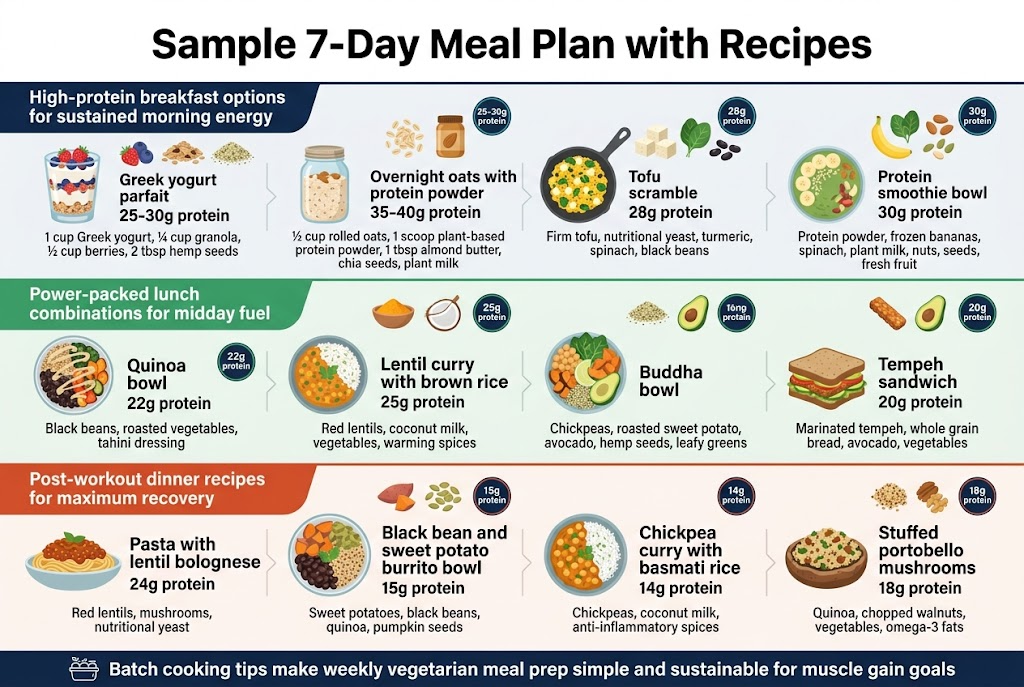
Start your day with protein-packed breakfasts that fuel muscle growth and keep you energized. Greek yogurt parfait with mixed berries, granola, and hemp seeds delivers 25-30g protein while providing complex carbs for sustained energy. Layer 1 cup Greek yogurt with ¼ cup granola, ½ cup berries, and 2 tablespoons hemp seeds.

Overnight oats with protein powder transform your morning routine. Mix ½ cup rolled oats, 1 scoop plant-based protein powder, 1 tablespoon almond butter, chia seeds, and plant milk. This combination provides 35-40g protein and can be prepared the night before.

Tofu scramble beats traditional eggs in protein content. Crumble firm tofu with nutritional yeast, turmeric, spinach, and black beans. One serving contains 28g protein plus iron and B-vitamins essential for muscle function.

Protein smoothie bowls offer endless variety. Blend protein powder, frozen bananas, spinach, and plant milk, then top with nuts, seeds, and fresh fruit. This creates a 30g protein breakfast that’s easily digestible before workouts.

Power-packed lunch combinations for midday fuel

Midday meals should balance protein, complex carbs, and healthy fats to maintain energy through afternoon training sessions. Quinoa bowls with black beans, roasted vegetables, and tahini dressing provide complete amino acid profiles. One bowl delivers 22g protein plus fiber for sustained energy release.

Lentil curry with brown rice creates a powerhouse combination. Red lentils cook quickly and pair perfectly with coconut milk, vegetables, and warming spices. This meal provides 25g protein per serving while supporting recovery with anti-inflammatory compounds.

Buddha bowls maximize nutrient density through variety. Combine chickpeas, roasted sweet potato, avocado, hemp seeds, and leafy greens. The diverse protein sources ensure all essential amino acids while providing micronutrients crucial for muscle building.

Tempeh sandwiches on whole grain bread offer convenient portable protein. Marinated tempeh provides 20g protein per serving, while whole grains supply complex carbohydrates for sustained energy. Add avocado and vegetables for additional nutrients and healthy fats.

Post-workout dinner recipes for maximum recovery

Post-workout dinners should prioritize protein synthesis and glycogen replenishment within the recovery window. Pasta with lentil bolognese combines fast-digesting carbs with complete proteins. Use red lentils, mushrooms, and nutritional yeast for a sauce containing 24g protein per serving.

Black bean and sweet potato burrito bowls deliver optimal recovery nutrition. Sweet potatoes provide quick carb replenishment while black beans offer 15g protein. Add quinoa for complete amino acids and top with pumpkin seeds for extra protein and minerals.

Chickpea curry with basmati rice speeds recovery through easily digestible proteins and carbs. Chickpeas provide 14g protein per cup, while coconut milk adds healthy fats that support hormone production. The anti-inflammatory spices aid recovery and reduce muscle soreness.

Stuffed portobello mushrooms with quinoa and nuts create a satisfying recovery meal. Large portobello caps hold quinoa, chopped walnuts, and vegetables, providing 18g protein plus healthy omega-3 fatty acids. The mushrooms add glutamine, an amino acid that supports muscle recovery and immune function.

Each dinner recipe includes preparation tips for batch cooking, making weekly vegetarian diet plan execution simple and sustainable for your muscle gain goals.

Key Micronutrients for Vegetarian Muscle Building
Aspect ratio 3:2, full-bleed wide infographic, clean professional flat vector style, bright modern health and fitness palette with deep green, orange, blue, purple, and neutral white background accents, bold sans-serif typography, strong visual hierarchy.

Top header across full width:
Large bold title centered at top: "Key Micronutrients for Vegetarian Muscle Building"
Smaller subtitle beneath: "Nutrition strategies for performance, recovery, bone strength, and muscle growth"

Below the header, arrange four wide content sections in a 2x2 grid with colored section headers and simple icons:

1) Top left section with a red-orange accent bar and a small iron icon:
Heading: "Iron Optimization Strategies for Enhanced Performance"
Include a small illustration of spinach, lentils, bell peppers, orange juice, and a cast iron pan.
Text blocks with checkmark bullets:
- "Pair iron-rich foods with vitamin C"
- "Spinach + bell peppers"
- "Lentils + tomatoes"
- "Fortified cereal + orange juice"
- "Cook with cast iron cookware"
- "Avoid coffee, tea, or milk with iron-rich meals"
Small side list title: "Top vegetarian iron sources"
Bullets:
- "Dark leafy greens"
- "Legumes"
- "Tofu and tempeh"
- "Quinoa and fortified cereals"
- "Pumpkin seeds and cashews"

2) Top right section with a blue-purple accent bar and a B12/zinc icon:
Heading: "B12 and Zinc Supplementation for Muscle Function"
Include a capsule icon, muscle icon, and zinc mineral symbol.
Text blocks with checkmark bullets:
- "B12 supports protein synthesis and red blood cell formation"
- "Vegetarian foods contain virtually no B12"
- "Take 250–500 mcg daily or 2,500 mcg weekly"
- "Zinc supports testosterone production and protein synthesis"
- "Soak beans and grains before cooking to reduce phytates"
Small side list title: "Best vegetarian zinc sources"
Bullets:
- "Pumpkin seeds"
- "Hemp seeds and tahini"
- "Cashews and almonds"
- "Whole grains and fortified cereals"
Small note at bottom: "Consider a combined B12/zinc supplement if blood tests reveal deficiencies"

3) Bottom left section with a teal accent bar and bone/sun icon:
Heading: "Vitamin D and Calcium for Bone Health and Strength"
Include a bone icon, sun icon, and calcium-rich foods.
Short intro text:
- "Strong bones support heavy weight training"
- "Aim for 1,000–1,200 mg calcium daily"
- "Take 1,000–2,000 IU vitamin D3 daily"
Include a simple table with two columns labeled exactly:
"Food" and "Calcium per serving"
Rows:
- "Greek yogurt (1 cup)" | "200–300 mg"
- "Fortified almond milk (1 cup)" | "450 mg"
- "Collard greens (1 cup cooked)" | "266 mg"
- "Tahini (2 tbsp)" | "126 mg"

4) Bottom right section with a green accent bar and omega-3 / recovery icon:
Heading: "Omega-3 Sources for Reduced Inflammation and Recovery"
Include a drop of oil, flaxseed, chia seeds, walnut, hemp hearts, and algae supplement icons.
Text blocks with checkmark bullets:
- "Omega-3s reduce exercise-induced inflammation"
- "Ground flaxseeds"
- "Chia seeds"
- "Walnuts"
- "Hemp hearts"
- "Algae oil supplements"
Small note at bottom:
- "Aim for 2–3 grams of ALA daily from food sources"
- "Consider algae-based EPA/DHA supplements for optimal recovery"

Design details:
Use clear section dividers, rounded cards, subtle shadows, and clean spacing.
Place a small dumbbell or muscle icon near the title for fitness context.
Use color-coded icons for each nutrient section.
Keep all text sharp and readable, with balanced wide layout and no vertical poster frame.

Iron Optimization Strategies for Enhanced Performance

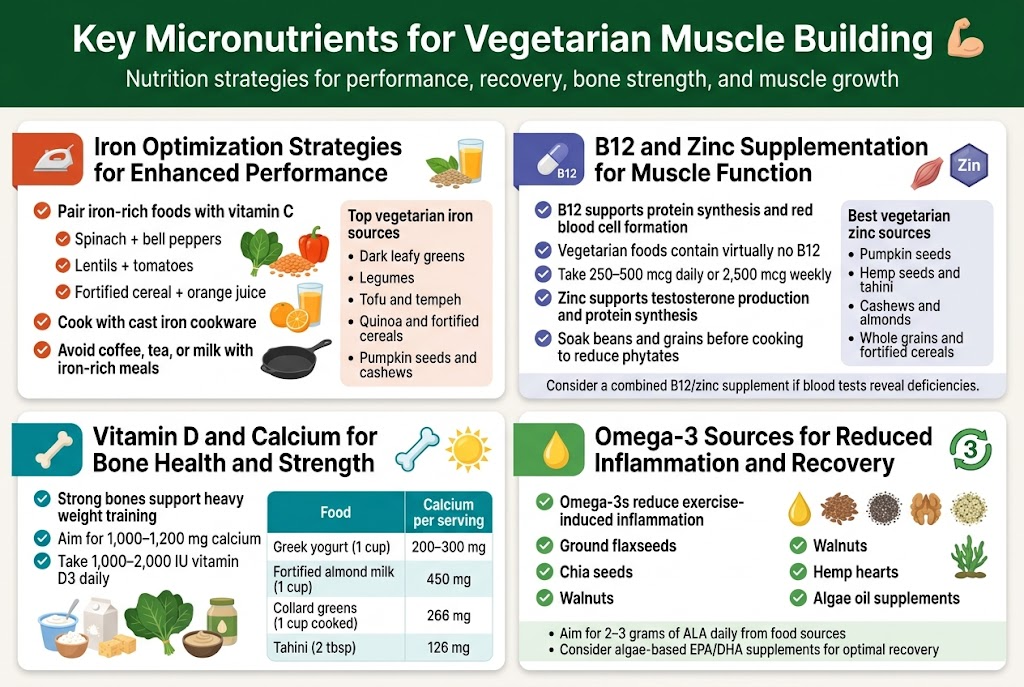
Plant-based diets require careful attention to iron intake since non-heme iron from plants gets absorbed less efficiently than heme iron from meat. To maximize iron absorption, combine iron-rich foods with vitamin C sources during meals. Pairing spinach with bell peppers, lentils with tomatoes, or fortified cereals with orange juice dramatically boosts iron uptake.

Cook in cast iron cookware when possible, as this adds extra iron to your meals. Avoid drinking coffee, tea, or milk with iron-rich meals since these beverages contain compounds that block iron absorption. Instead, save your morning coffee for between meals.

Top vegetarian iron sources:

  • Dark leafy greens (spinach, kale, Swiss chard)
  • Legumes (lentils, chickpeas, black beans)
  • Tofu and tempeh
  • Quinoa and fortified cereals
  • Pumpkin seeds and cashews

B12 and Zinc Supplementation for Muscle Function

B12 deficiency can seriously impact muscle building and recovery since this vitamin plays a crucial role in protein synthesis and red blood cell formation. Vegetarian foods contain virtually no B12, making supplementation essential for muscle gain. Take 250-500 mcg daily or 2,500 mcg weekly.

Zinc supports testosterone production and protein synthesis, making it vital for muscle growth. Plant-based diets often fall short on zinc since phytates in grains and legumes reduce absorption. Soak beans and grains before cooking to minimize phytates.

Best vegetarian zinc sources:

  • Pumpkin seeds (highest concentration)
  • Hemp seeds and tahini
  • Cashews and almonds
  • Whole grains and fortified cereals

Consider a combined B12/zinc supplement if blood tests reveal deficiencies.

Vitamin D and Calcium for Bone Health and Strength

Strong bones provide the foundation for muscle building and heavy weight training. Vegetarian diets can easily meet calcium needs through dairy products, fortified plant milks, leafy greens, and sesame seeds. Aim for 1,000-1,200 mg daily.

Vitamin D enhances calcium absorption and supports muscle function. Most people need supplementation, especially those with limited sun exposure. Take 1,000-2,000 IU daily of vitamin D3.

Calcium-rich vegetarian foods:

Food Calcium per serving
Greek yogurt (1 cup) 200-300 mg
Fortified almond milk (1 cup) 450 mg
Collard greens (1 cup cooked) 266 mg
Tahini (2 tbsp) 126 mg

Omega-3 Sources for Reduced Inflammation and Recovery

Omega-3 fatty acids reduce exercise-induced inflammation and speed recovery between training sessions. While fish provides the most bioavailable forms (EPA and DHA), vegetarians can get ALA omega-3s from plant sources, though conversion to EPA and DHA remains limited.

Include these omega-3 rich foods in your weekly vegetarian diet plan:

  • Ground flaxseeds (add to smoothies and oatmeal)
  • Chia seeds (great in puddings and protein shakes)
  • Walnuts (perfect pre-workout snack)
  • Hemp hearts (sprinkle on salads)
  • Algae oil supplements (direct source of DHA)

Aim for 2-3 grams of ALA daily from food sources, plus consider algae-based EPA/DHA supplements for optimal muscle recovery and overall health.
Full-bleed infographic illustration, aspect ratio 3:2, clean modern fitness/nutrition style, wide horizontal layout with no frame and no narrow centered stack. Top center: large bold heading in dark navy, text exactly "Conclusion". Under the heading, a smaller subtitle across the width in medium gray: "Building muscle on a vegetarian diet is absolutely achievable". Use a crisp sans-serif font, strong visual hierarchy, white background with green, blue, and warm orange accents, subtle plant-based and fitness motif, professional and energetic.

Main content organized into 4 wide horizontal blocks or cards across the middle, each with a distinct icon and short text:
1) Left block: a blue protein bowl icon with legumes, quinoa, and Greek yogurt. Title text: "1. Prioritize Protein". Body text: "Legumes, quinoa, and Greek yogurt"
2) Second block: a clock and dumbbell icon with an arrow around a workout window. Title text: "2. Time Meals Around Workouts". Body text: "Fuel recovery before and after training"
3) Third block: a green upward arrow over a balanced plate icon. Title text: "3. Use a Smart Caloric Surplus". Body text: "Support muscle growth without unwanted fat gain"
4) Fourth block: micronutrient icons for iron, zinc, and vitamin B12 in small circles. Title text: "4. Don't Neglect Micronutrients". Body text: "Iron, zinc, and vitamin B12 matter"

Bottom wide banner section with a checklist icon on the left and bold call-to-action text in two lines:
"Plan weekly meals"
"Track protein intake"

Along the bottom right, a strong concluding statement in larger text inside a rounded callout:
"Chickpeas or chicken — muscles need adequate nutrition and consistent training"

Add subtle background graphics of leaves, plate, fork, dumbbell, and meal prep containers. Use clear spacing, aligned edges, and visual icons beside each numbered point. Make the text fully legible and exact.

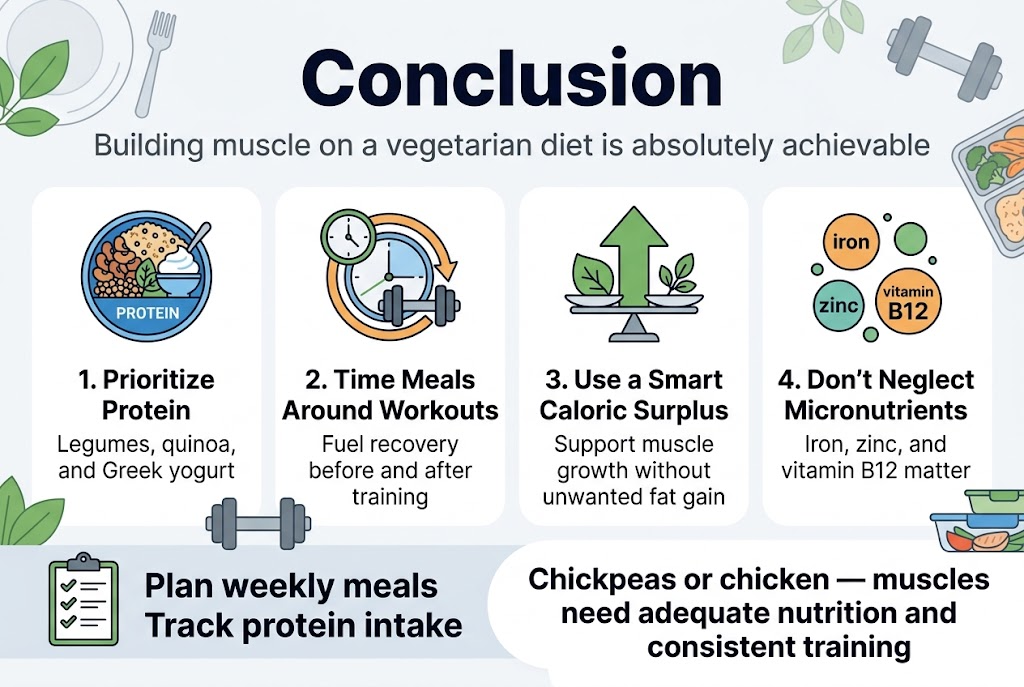
Building muscle on a vegetarian diet is absolutely achievable with the right approach. Focus on getting enough protein from diverse plant-based sources like legumes, quinoa, and Greek yogurt while timing your meals around workouts for optimal recovery. The key is maintaining a smart caloric surplus that fuels muscle growth without unwanted fat gain, and don’t forget about crucial micronutrients like iron, zinc, and vitamin B12 that support your muscle-building goals.

Start implementing these strategies today by planning your weekly meals and tracking your protein intake. Your muscles don’t care whether your protein comes from chicken or chickpeas – they just need adequate nutrition and consistent training. With dedication and proper planning, you’ll discover that plant-based eating can be just as effective for building the strong, lean physique you’re working toward.


Leave a Comment

Your email address will not be published. Required fields are marked *