
New to meditation and wondering how to get started? You’re not alone. Many people want to try meditation for beginners but feel overwhelmed by where to begin or worry they’re “doing it wrong.”
This step-by-step guide is designed for complete beginners who want to learn how to start meditation without complicated techniques or confusing instructions. You’ll discover practical ways to begin a basic meditation practice that fits into your real life.
We’ll walk you through the essential benefits of meditation for stress relief and mental health, then show you how to set up your first practice sessions for success. You’ll also master a simple breath-focused meditation technique that anyone can learn, plus get tips for handling the mental distractions that trip up most new meditators.
Understanding the Benefits of Meditation for Stress Relief and Mental Health
Lowering stress levels and releasing physical tension
Meditation for beginners offers profound benefits for stress relief, particularly through its ability to address both mental and physical manifestations of tension. When we experience stress, our bodies naturally hold tension in various muscle groups while our minds harbor persistent worries. Basic meditation practice creates a systematic approach to releasing this accumulated stress by promoting deep relaxation responses throughout the nervous system.
The physiological impact of meditation for mental health becomes evident as practitioners learn to consciously relax tense muscles and quiet racing thoughts. This dual approach addresses stress at its source, preventing the chronic buildup that often leads to more serious health complications. Regular practice helps establish new neural pathways that favor calm over reactivity.
Easing anxiety and improving mood
The connection between meditation benefits for stress relief and emotional well-being extends significantly to anxiety management and mood enhancement. Through consistent practice, meditation helps regulate the body’s stress response system, reducing the frequency and intensity of anxious thoughts and feelings.
Starting a meditation routine specifically targets the mental patterns that contribute to persistent anxiety and low mood states. By developing awareness of these patterns without judgment, practitioners can begin to observe their emotional states with greater objectivity, leading to natural improvements in overall mood stability and emotional balance.
Enhancing sleep quality and mental clarity
One of the most immediate benefits newcomers notice when learning how to start meditation is the improvement in sleep quality. Meditation for beginners helps quiet the mental chatter that often prevents restful sleep, allowing for deeper, more restorative rest cycles.
This enhanced sleep quality creates a positive feedback loop that supports mental clarity during waking hours. As sleep improves, cognitive function sharpens, decision-making becomes clearer, and overall mental performance increases. The calming effects of meditation practice extend well beyond the session itself, creating lasting changes in how the mind processes daily experiences.
Building emotional resilience and measured responses
Perhaps the most transformative aspect of beginner meditation techniques lies in developing emotional resilience. Meditation cultivates a sense of inner calm that enables more measured, thoughtful responses to life’s challenges rather than automatic emotional reactions.
Research demonstrates that as little as 12 minutes of daily practice over an eight-week period can produce noticeable changes in brain structure and function. These neuroplastic changes decrease anxiety levels while simultaneously increasing immune function and overall happiness and well-being. This scientific validation shows that meditation step by step guide approaches can yield measurable results in a relatively short timeframe, making it an accessible and effective tool for anyone seeking to improve their mental health and stress management capabilities.
Setting Up Your Practice for Success
Finding the Optimal Time Commitment Starting with 5 Minutes Daily
When beginning your meditation journey, the key is to start small and build gradually. Begin with just 5 minutes each day rather than attempting lengthy sessions that might feel overwhelming. This manageable timeframe allows you to establish the foundation of your practice without creating pressure or resistance. As you become more comfortable with the routine over several weeks, you can gradually increase the time to suit your growing capacity and interest.
For best results, integrate regular meditation into your daily routine rather than treating it as an occasional activity. This consistency transforms meditation from a sporadic effort into a natural part of your day, making it easier to maintain long-term.
Creating a Comfortable and Supportive Meditation Space
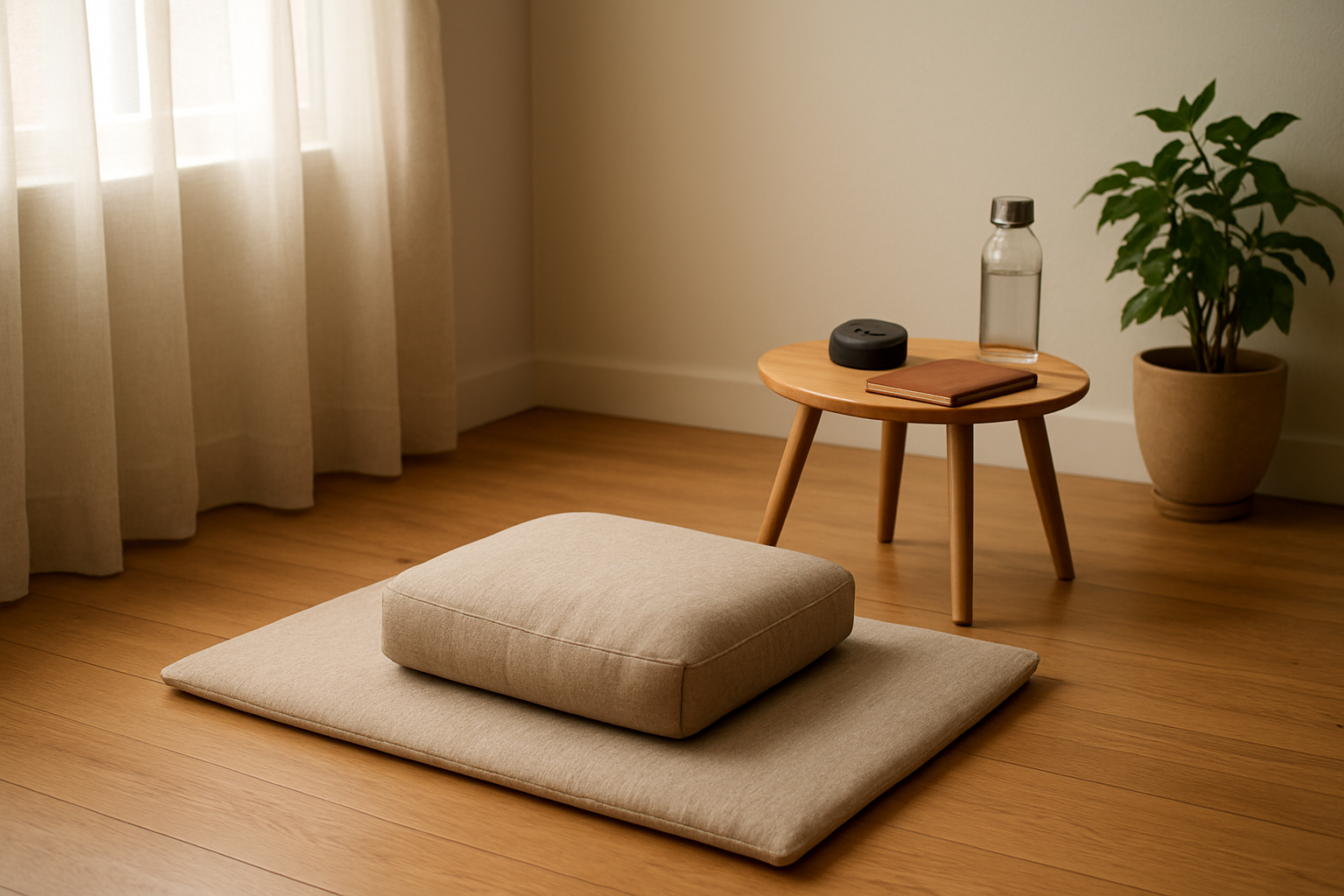
Setting up your meditation environment requires minimal preparation, as no specialist equipment is needed for effective practice. Choose a comfortable and warm place to sit where you feel at ease and undisturbed. You have several seating options that can work equally well for your meditation for beginners practice.
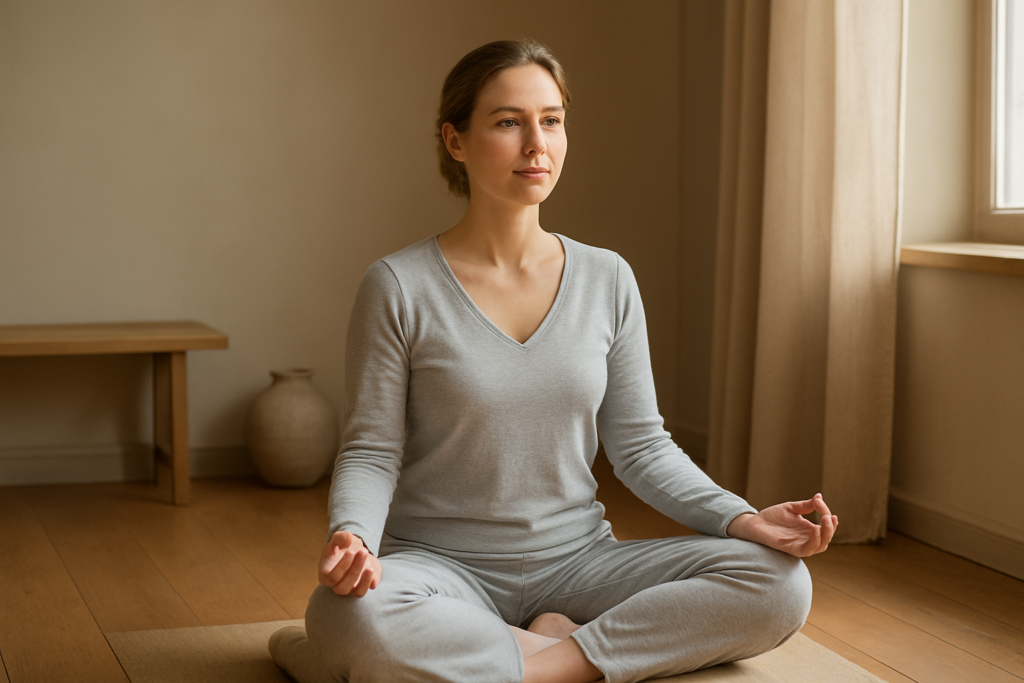
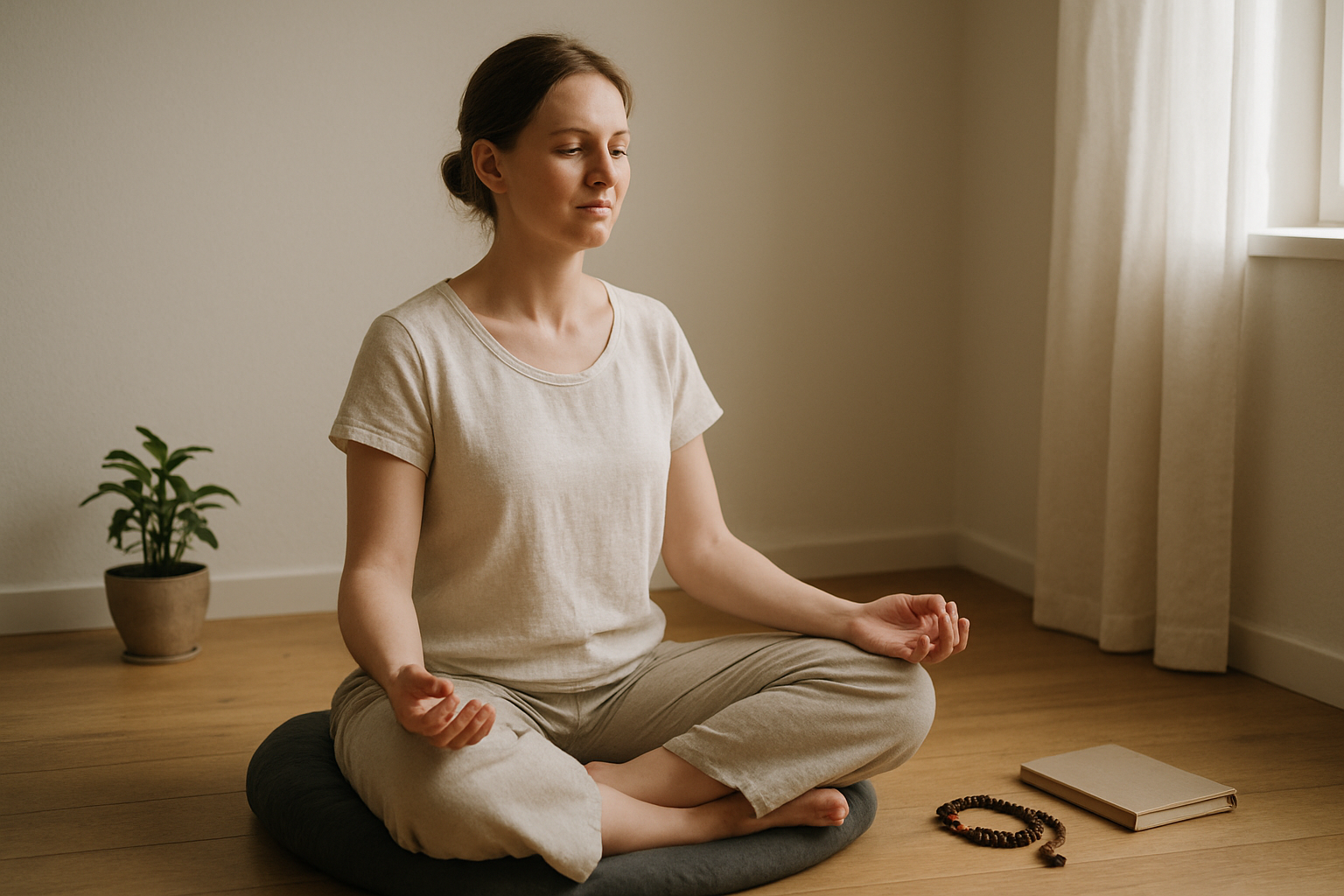
You can sit cross-legged on the floor, enhanced with a cushion, mat, or towel for added comfort. Alternatively, sit upright in a supportive chair that maintains good posture, or even on your bed if that feels most comfortable for your body.
The ideal posture embodies dignity and wakefulness – aim to be upright but not rigid. This balance allows you to remain alert and focused while avoiding unnecessary tension that could become distracting during your session.
Choosing the Best Time of Day That Fits Your Schedule
Finding the right time for your meditation practice is highly personal and depends on your individual schedule and energy patterns. Some practitioners prefer starting their day with meditation, using it as a foundation for clarity and calm before daily activities begin. Others find that midday sessions, such as during lunch breaks, provide a refreshing reset that carries them through the afternoon. Evening meditation can serve as a transition from the day’s activities into relaxation and rest.
The most important factor is selecting a time that works consistently with your lifestyle and commitments. When starting a meditation routine, consider your energy levels, daily obligations, and when you’re least likely to be interrupted.
Building Meditation into a Consistent 66-Day Habit Formation
Consistency is the cornerstone of establishing meditation as a lasting practice. According to the latest research on habit formation, it takes approximately 66 days to solidify a new behavior into an automatic routine. This timeframe provides a realistic expectation for how long you should commit to daily practice before meditation becomes a natural part of your life.
During these initial 66 days, focus on showing up every day rather than perfecting your technique. The goal is to create the neural pathways that make meditation feel as natural as brushing your teeth. Even on days when you feel resistant or distracted, maintaining your 5-minute commitment builds the consistency that transforms this beginner meditation practice into a sustainable, long-term habit that supports your mental health and stress relief goals.
Mastering the Basic Breath-Focused Meditation Technique
Finding Your Comfortable and Upright Posture
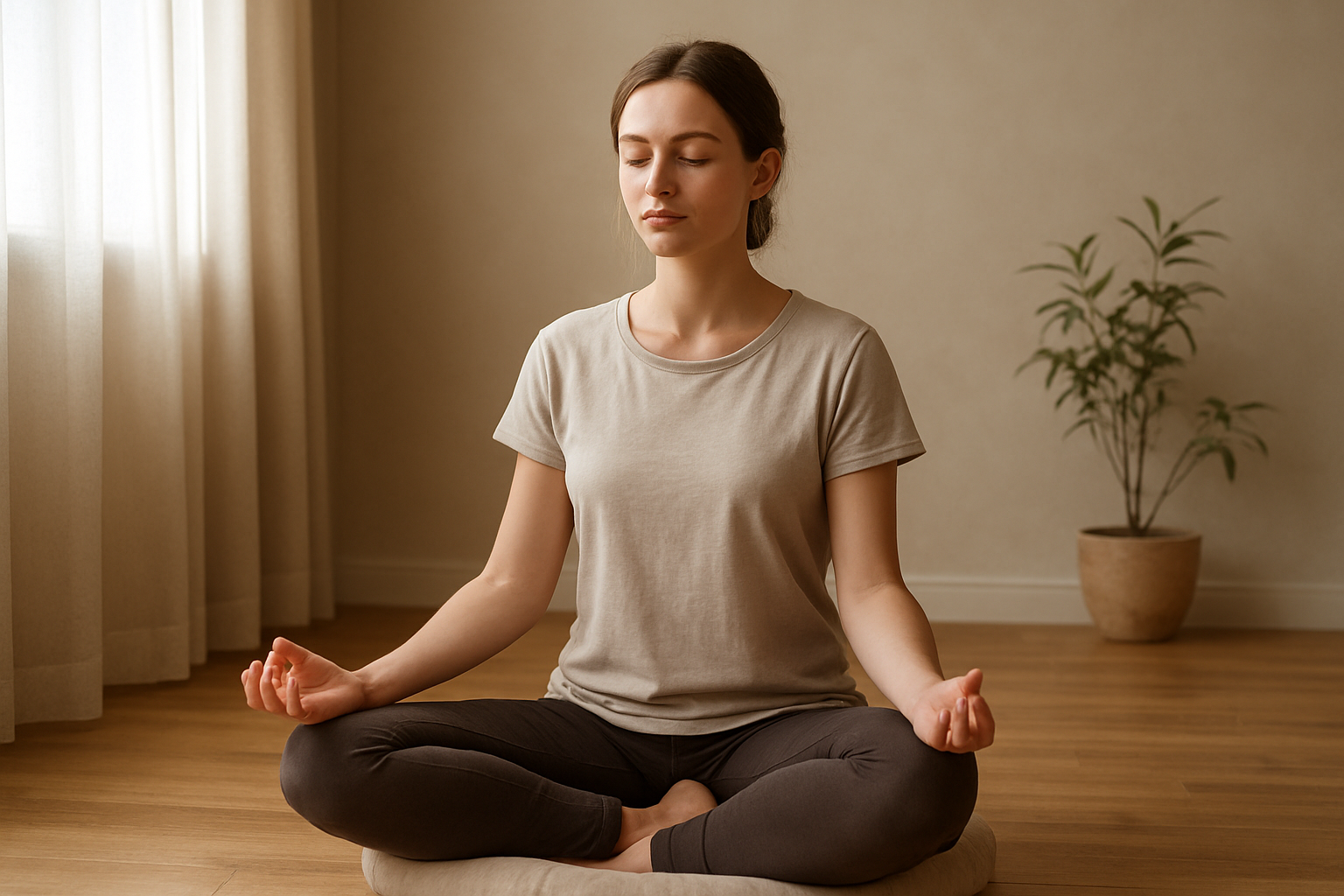
Establishing the right posture forms the foundation of effective breath-focused meditation for beginners. You have flexibility in choosing your meditation position – whether sitting on the floor with proper support or in a chair. The key principle remains consistent: maintain an upright posture that prevents slumping while ensuring comfort throughout your practice.
When sitting on the floor, consider using a cushion or meditation pillow to support your hips and maintain the natural curve of your spine. If you prefer a chair, choose one that allows your feet to rest flat on the ground with your back supported yet upright. This positioning helps you stay alert and focused during your meditation session.
Using Breath Counting or Simple In-Out Repetition
Now that we have covered proper posture, the next step involves establishing a rhythm with your breath through mental repetition techniques. For beginner meditation techniques, there are two effective approaches you can choose from based on your preference.
The first method involves simple mental labeling: as you breathe in, mentally say “breathe in,” and as you breathe out, say “breathe out.” This creates a gentle rhythm that keeps your mind engaged with the breath.
Alternatively, you can use the counting technique, which provides more structure for those who prefer it. Count “One” for your in-breath, then “One” for your out-breath. Continue this pattern up to ten, then start the cycle over again. This method helps maintain focus and provides a clear framework for your basic meditation practice.
Focusing on Physical Breath Sensations as Your Anchor
With this breathing rhythm established, direct your attention to the physical sensations of breathing, which serve as your meditation anchor. Focus on wherever you feel the breath most prominently – this could be in your chest as it rises and falls, in your nose as air passes through your nostrils, or in your belly as it expands and contracts.
This physical focus transforms breath-focused meditation from a purely mental exercise into a embodied practice. By anchoring your attention on these tangible sensations, you create a reliable point of return whenever your mind begins to wander during your meditation step by step process.
Following the Step-by-Step 7-Point Meditation Process
Previously, we’ve established the physical and breathing foundations. Now, let’s explore the comprehensive 7-step process that structures your entire meditation session:
Step 1: Set aside dedicated time, such as 20 minutes daily, for consistent practice.
Step 2: Find your comfortable, upright meditation space using the posture guidelines above.
Step 3: Bring mindfulness into your meditation by taking a moment to notice your senses and present-moment awareness.
Step 4: Begin meditating by focusing on your breath using either the simple mental repetitions or counting techniques.
Step 5: Recognize when your mind wanders and gently redirect your attention back to the breath without judgment.
Step 6: Address meditation challenges like intrusive thoughts while maintaining natural, unforced breathing patterns.
Step 7: Bring your meditation session to a gradual close, transitioning mindfully back to your daily activities.
This systematic approach provides structure for starting a meditation routine while maintaining the flexibility needed for personal adaptation.
Handling Common Meditation Challenges and Mental Distractions
Managing wandering thoughts without self-judgment
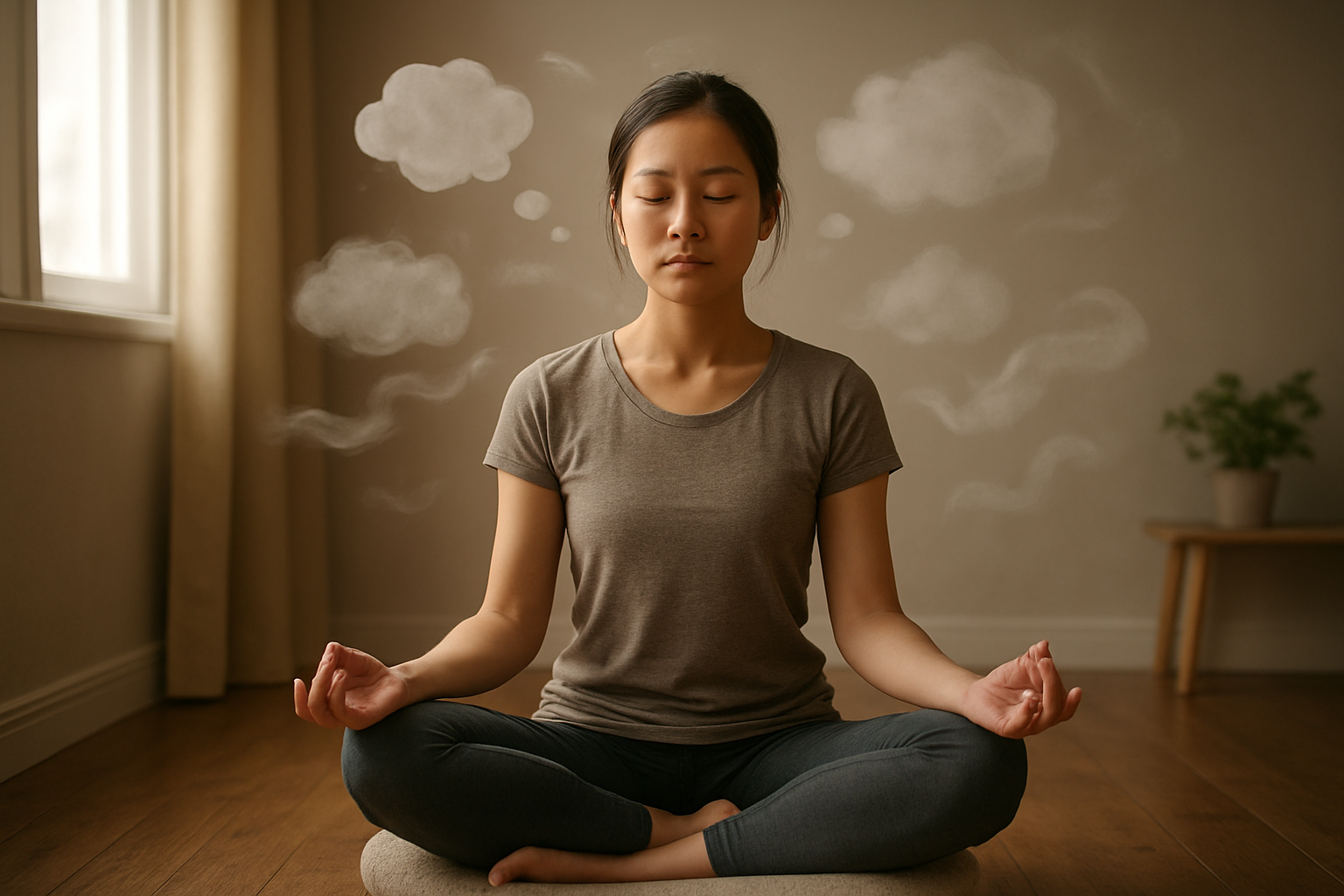
A wandering mind is a natural part of meditation practice, not a failure. When you begin your meditation for beginners journey, it’s essential to understand that the goal is not to achieve a blank mind. Instead, the objective is to notice when your mind wanders and gently guide your focus back to your breath.
If your mind wanders multiple times during your session, this is completely normal for those learning how to start meditation. Simply bring your attention back each time without self-judgment. This gentle redirection is actually the practice itself – each time you notice your mind has drifted and return to your breath, you’re strengthening your awareness muscle.
Dealing with intrusive worries and mental spirals
When intrusive thoughts or worries arise during your meditation practice, you can implement a simple labeling technique. Rather than engaging with these thoughts or criticizing yourself for having them, simply label them with neutral terms such as “worrying,” “planning,” or “thinking.” This basic meditation practice helps you observe your mental patterns without getting caught up in their content.
Let these labeled thoughts be present without resistance or judgment. Remember that meditation benefits for stress relief come not from eliminating thoughts, but from changing your relationship with them.
Balancing focused breathing with natural breath rhythm
It can be challenging to balance focused breathing with your natural breath rhythm, especially when you’re starting a meditation routine. This delicate balance develops with practice and patience. Don’t force your breath into an unnatural pattern; instead, allow your natural breathing rhythm to guide your meditation while maintaining gentle awareness.
Embracing whatever arises with non-judgmental awareness
Embrace whatever arises during your session with non-judgmental awareness. A meditation filled with thoughts, emotions, or physical sensations is still beneficial and valid. This meditation tip for beginners is crucial: there is no “perfect” meditation session, only opportunities to practice awareness and acceptance of your present-moment experience.
Ending Your Session and Transitioning Back to Daily Life
Gradually Completing Your Meditation Without Rushing
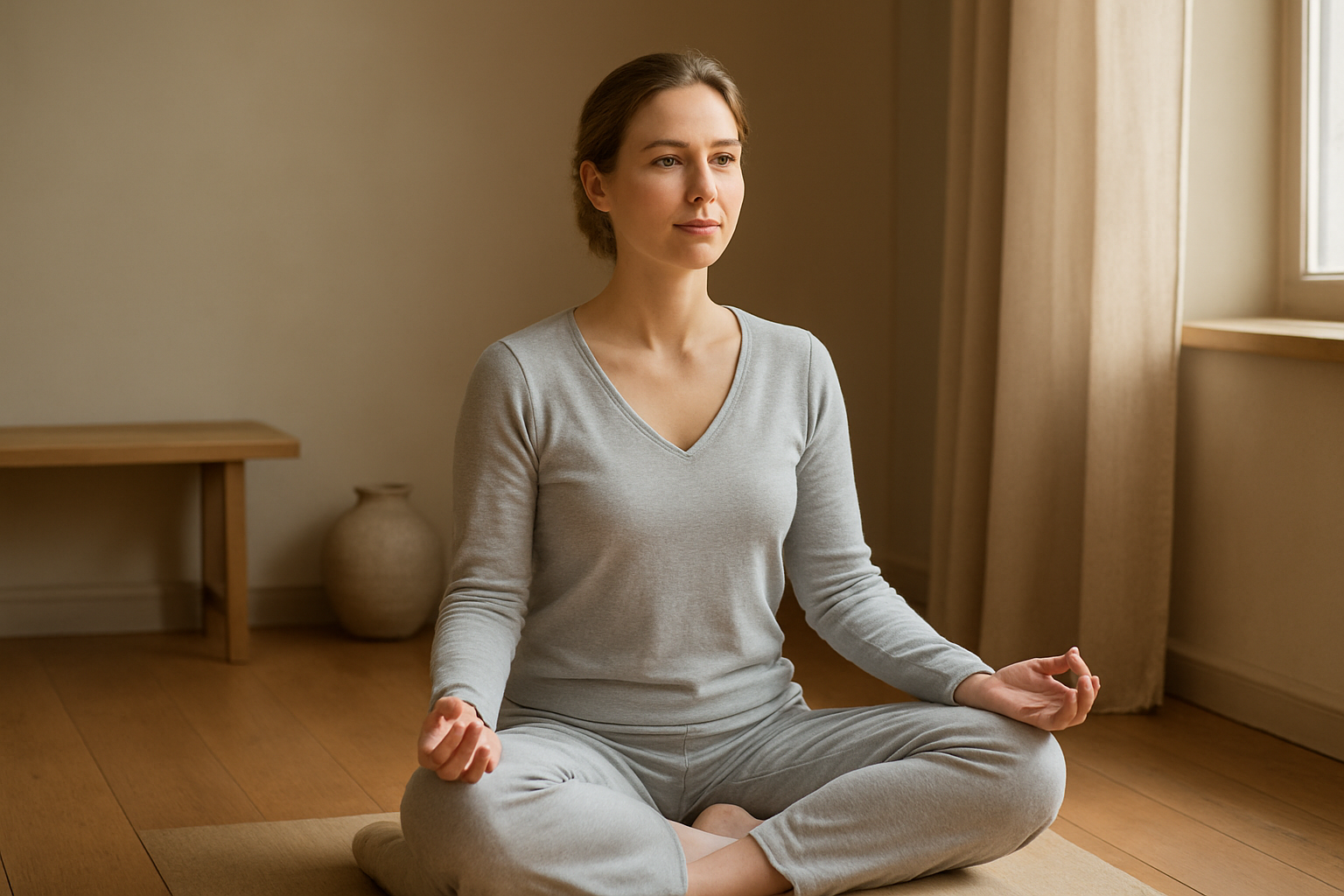
Now that you’ve completed your breath-focused meditation practice, the way you end your session is just as crucial as how you began. One of the most common mistakes in meditation for beginners is finishing too abruptly, which can undo much of the calming benefits you’ve just cultivated. Instead of suddenly snapping out of your meditative state, it’s essential to create a gentle bridge between your inner awareness and the external world.
When you sense that your meditation session is coming to a natural end, resist the urge to immediately open your eyes or jump up. This gradual completion allows your nervous system to maintain the peaceful state you’ve developed during your basic meditation practice.
Taking Time for Gentle Transition Before Opening Eyes
The transition phase is a critical component that many beginner meditation techniques overlook. Once you feel ready to conclude your session, begin by stopping your focus on the breath or ceasing any mantra repetition you may have been using. However, maintain your seated position with your eyes closed for a couple more minutes.
This intermediate step serves as a buffer zone between your meditative state and full awareness. During these moments, simply rest in the stillness you’ve created, allowing your mind to naturally surface from its deeper levels of concentration. This gentle transition prevents the jarring sensation that can occur when moving too quickly from meditation back to ordinary consciousness.
Staying Seated Briefly Before Returning to Activities
After you gently open your eyes when you feel ready, continue to honor the transition process by remaining seated for a little longer. This practice is particularly valuable for those following a meditation step by step guide, as it demonstrates respect for the sacred space you’ve created within yourself.
Use this time to slowly reconnect with your physical surroundings while maintaining the inner calm you’ve cultivated. Allow your eyes to adjust to the light and your awareness to gradually expand outward. This patient approach to concluding your session reinforces the mindful attitude that makes meditation for stress relief so effective.
Carrying the Calm Mindset Into Your Day
The ultimate goal of this gradual transition process is to help you carry the peaceful mindset you’ve developed during meditation into the rest of your day. This seamless integration is what transforms meditation for mental health from an isolated practice into a lifestyle enhancement.
By taking time to transition slowly, you create neural pathways that help maintain the calm, centered feeling throughout your daily activities. This approach ensures that your starting a meditation routine yields lasting benefits beyond the cushion, making each session a meaningful investment in your overall well-being and stress management.
Exploring Helpful Tools and Resources for Continued Growth
Using meditation apps like Insight Timer and Headspace
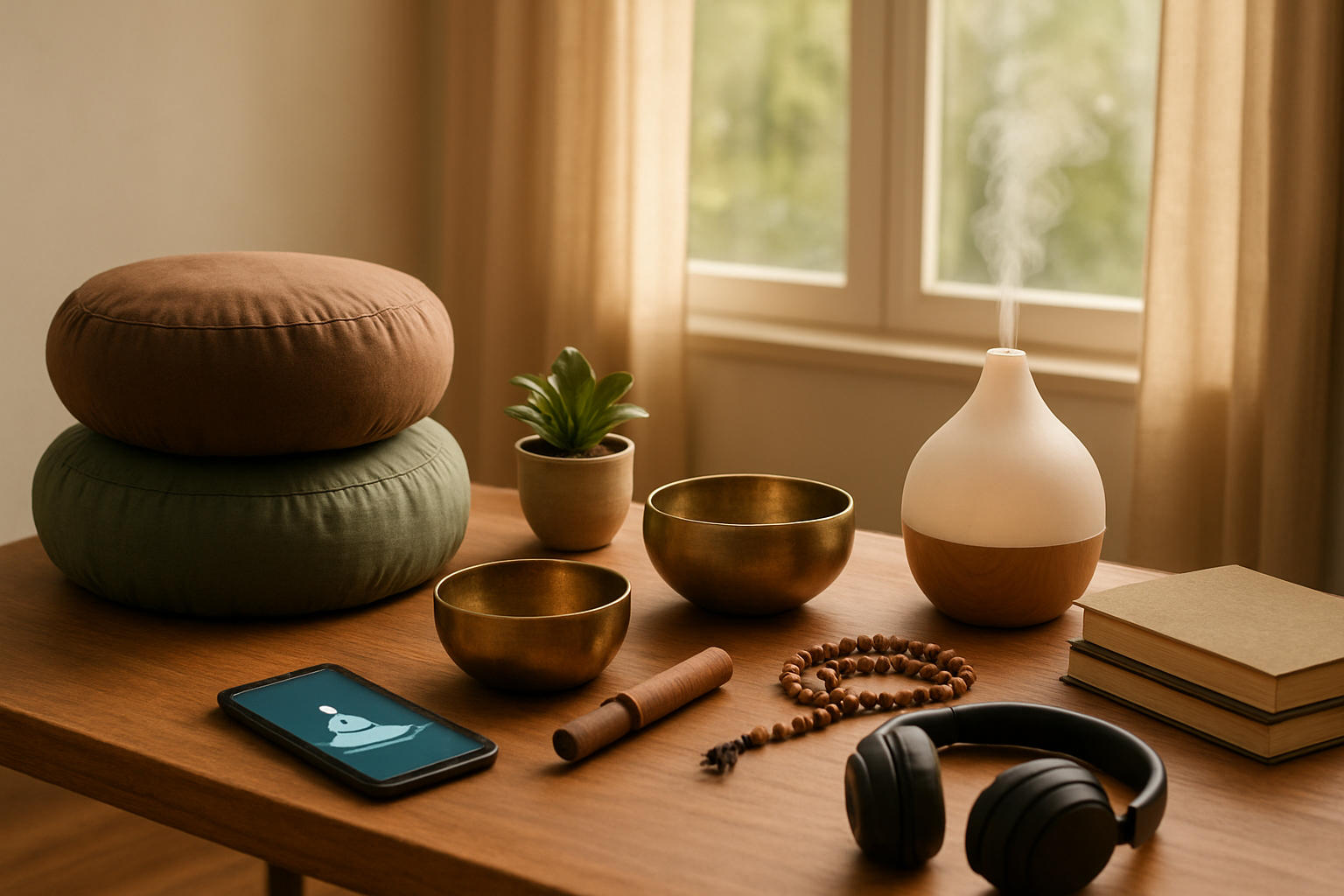
Now that we’ve covered the fundamentals of establishing a meditation practice, exploring digital tools can significantly enhance your meditation for beginners journey. Meditation apps have revolutionized how newcomers access quality guidance and support for their practice. Several standout applications offer comprehensive resources specifically designed for those learning how to start meditation.
Insight Timer stands out as one of the most popular platforms, featuring an extensive library of guided meditations suitable for beginners. The app includes customizable interval bells that help maintain timing during your sessions, along with ambient sounds that create an optimal meditation environment. Headspace offers structured programs that take you through meditation step by step guide approaches, making it particularly valuable for establishing consistent routines.
Additional apps worth exploring include Buddhify, which provides meditations tailored to different life situations, and Smiling Mind, designed with beginners in mind. 10% Happier offers practical, no-nonsense guidance for skeptics, while Stop, Breathe, Think provides personalized recommendations based on your current emotional state. These platforms typically feature guided meditations, timing tools, and ambient sounds that support your basic meditation practice development.
Trying guided body scan and breath awareness meditations
With these apps at your disposal, you can explore specific meditation techniques that form the foundation of effective practice. Guided body scan meditations offer an excellent starting point for developing body awareness and identifying areas where tension accumulates. This technique involves systematically focusing attention on different parts of your body, helping you recognize physical sensations and promote relaxation.
Body scan practices are particularly beneficial for beginners because they provide a concrete focus point beyond breath awareness. As you progress through each body region, you’ll develop greater sensitivity to physical tension and learn to release stress naturally. This approach supports meditation benefits for stress relief by creating a direct connection between mental awareness and physical relaxation.
Guided breath awareness meditations complement body scanning by centering your attention on breathing patterns. These sessions teach you to observe your natural breath rhythm without attempting to control it, which is fundamental to breath focused meditation techniques. Regular practice with guided breath awareness helps reduce stress and tension while building concentration skills essential for independent meditation sessions.
Addressing physical discomfort during practice
Previously, many beginning meditators encounter physical challenges that can disrupt their focus and motivation. Physical discomfort during practice is completely normal and shouldn’t discourage your meditation for beginners journey. The key lies in making appropriate adjustments to maintain comfort while preserving the integrity of your practice.
Posture adjustments form the first line of defense against discomfort. If sitting cross-legged causes pain, try sitting on a cushion, chair, or against a wall for back support. The goal is finding a position that allows you to remain alert while minimizing physical strain. Props such as meditation cushions, bolsters, or blankets can provide additional support and help you maintain proper alignment throughout your session.
Remember that some mild discomfort is acceptable and can even become part of your meditation practice as you learn to observe sensations without immediately reacting. However, sharp pain or significant discomfort should prompt immediate position changes. This balanced approach ensures your meditation tips for beginners include practical solutions for common physical challenges.
Finding additional books and online resources for deeper learning
With this foundation in place, expanding your knowledge through quality resources will deepen your understanding and commitment to meditation practice. “Mindfulness: An Eight-Week Plan for Finding Peace in a Frantic World” by Mark Williams and Danny Penman provides a comprehensive program that guides beginners through systematic meditation development. This book offers structured lessons that complement your app-based practice with theoretical understanding and progressive exercises.
Online resources provide additional support for your meditation journey. MINDFULNESS 101 offers accessible explanations of core concepts, while “Mindfulness: The Basics” from mindful.org presents practical guidance for integrating meditation into daily life. These platforms provide articles, research findings, and expert insights that enhance your understanding of meditation benefits for mental health and stress management.
Starting a meditation routine becomes more sustainable when you have diverse learning resources at your disposal. These books and websites offer different perspectives and techniques, allowing you to find approaches that resonate with your personal learning style and preferences.
Starting a meditation practice doesn’t require special equipment, mystical knowledge, or perfect conditions – just a willingness to pause, breathe, and be present. By understanding the stress-relief benefits, setting up a comfortable space, mastering basic breath-focused techniques, and learning to handle mental distractions with gentle awareness, you’ve built a solid foundation for lasting practice. Remember that a wandering mind isn’t a failure but a natural part of the process, and even sessions filled with thoughts and restlessness are still beneficial.
The key to reaping meditation’s rewards lies in consistency rather than perfection. Start with just 5 minutes daily and gradually build your practice over time, allowing it to become as routine as brushing your teeth. With helpful tools like meditation apps and guided sessions at your disposal, you have everything needed to develop greater self-awareness, emotional balance, and inner calm. Your meditation journey is uniquely yours – embrace whatever arises in each session and trust that the benefits will unfold naturally as you continue to show up for yourself, one breath at a time.